The Internet Craftsmanship Museum Presents:

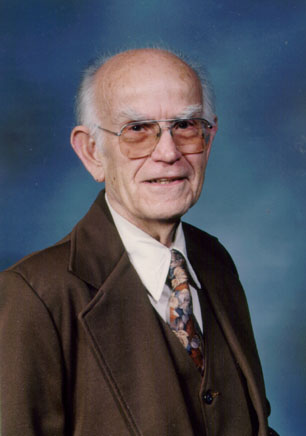
Michel Lefaivre

Joe Martin Foundation "Metalworking Craftsman of the Year" award winner for 2010

Award-winning miniature arms from France's history

Michel Lefaivre of Paris, France at work on a small milling machine making one of his miniature parts. (Click on photo to view larger image.)

Introduction

Michel Lefaivre is in a somewhat different class from many well respected miniature arms makers producing work of this quality in that he calls himself an “amateur.” This in no way reflects on the quality of his work; it simply means he does not make these pieces in order to make a living selling them. Retired from a career in industry, he makes pieces of beauty and distinction to meet his own exacting standards without regard to the profitability of the time spent. In fact, in the few instances when he has consented to sell a piece, he has regretted the sale more than he appreciated the income. Michel has produced several award winning pieces, details of which are presented here.

Michel has been selected as the 2010 recipient of the Foundation's Metalworking Craftsman of the Year award. He will receive the award along with a check for $2000.00 and an engraved gold medallion at the North American Model Engineering Society Expo in Detroit, MI on April 24th, 2010.

Autobiography

I have been always fascinated by the making of models of any kind. Very early in my childhood I was able to distinguish the top quality models from the average ones. My own apprenticeship began when I was about 12 years old. I liked to cut a piece of wood and carve it until it resembled something precise like a car, an aircraft, a boat…a gun stock. I then made more and more difficult models. Simultaneously, I was also fascinated by arms, already knowing that when properly used, they were the key elements of wars and wars key elements of history.

As I grew up, I wanted to become a mechanical engineer. This was accomplished by the age of 22. Two years of military duty in 1962-63 in an armoured regiment confirmed my positive interest in weapons, especially handguns. Different occupation jobs, such as shipbuilding maintenance engineer, weapon design engineer and working with gas equipment as an application, sales and export manager in an American company, gave me a wide experience in industry until I happily retired in 2000.

Catching “Miniature Fever”

The miniature fever was upon me when in the sixties I visited the Science Museum in London and saw all the working steam and diesel engine scale models. I was so impressed by all these masterpieces that I wanted to do something similar myself applied to handguns. I knew I was capable of it, being already a good mechanical fitter. I learned hand-fitting at school and was the best in that topic as well as in mechanical drawing during all the years spent in engineering school in Paris. So, for testing my ability to make miniature arms, I started making a simple flintlock mechanism in 1/3 scale and then the complete pistol. As I was proud of the result, I made a second model of the same pistol to have a pair. Since that time, I have always desired to do better and better and have improved my skill on each project.

The terms ''Outstanding, Top quality, Museum quality, Masterpiece'' were my objectives. I always wanted to increase the level of difficulty and finding solutions to the resulting problems excites me. It was never without effort, sometimes a lot, but when the work is done, it is so rewarding when you consider the result.  I like competition between other craftsmen but with one small difference: the purpose of my hobby is not to make money. Otherwise I would have starved! Although I know how many hours I spent on each piece I made, I have very seldom sold one. I remember when I sold one of my beautiful pieces several years ago. The piece was sold, and a few weeks later the money was spent. I don't even remember where the money has gone now, but I still miss the piece.

A miniature Boutet pistol from the famous Manufacture de Versailles, was for me the best that could be done in miniature. After hesitation and reflection I decided to undertake an encased pair of these pistols in miniature. Fortunately, a friend of mine owned a pair of such treasures that I could use as a model for establishing all the manufacturing drawings. After more than 1000 recorded hours of work, I finally finished this pair of Boutet pistols, the case and all the loading and cleaning accessories. I can say now that one of the most difficult jobs was to make to scale the checkering of the stock, and the special tooling to do it.

All the engravings and gold inlays have been made by a friend of mine who is certainly the best engraver in France. Since that time, I continue to make miniatures of weapons  from this never equalled  Manufacture from Versailles.

In conclusion, I have always considered top quality as the criteria for making miniatures, without regard for the time spent on them. This explains why I have produced only a small quantity of pieces to my great satisfaction. The following pictures, such as those of the miniature blunderbuss of Prince Eugene that won the first silver medal at the NRA miniature contest in 2005, will give an idea of what we call a masterpiece in miniature.

Hunting Blunderbuss of Prince Eugène

A scale model of a hunting blunderbuss from the Manufacture de Versailles that belonged to Prince Eugène de Beauharnais, son of Empress Josephine de Beauharnais and adoptive son of Emperor Napoleon 1st, Division General, Viceroy of Italy, Duke of Leuchtenberg. The miniature was  made by Michel Lefaivre in 2002/2003. The full size model is the  property of Musée du Louvre and is exhibited at the Hunting and Nature Museum at Hotel de Guénégaud, Paris. (Click on photo to view larger image.)


The gun presented  is a miniature reproduction in 1/3 scale of the hunting blunderbuss that belonged to Prince Eugène de Beauharnais (1781-1824), Viceroy of Italy, adopted son of  Emperor Napoleon 1st and son of Empress Josephine de Beauharnais. It was awarded a silver medal in the “Best Arms” division by the Miniature Arms Society in 2005.

This miniature is completely functional, one of a kind, and a faithful reproduction in the smallest detail of the full size weapon produced under the Empire by the top quality weapons workshop of the famous Manufacture de Versailles, managed by Nicolas Noël Boutet whose signature is synonymous with the greatest names in the history of art.

The miniature hunting blunderbuss was made thanks to the great kindness of the Musée du Louvre and the Museum of Hunting and Nature, located in the beautiful Hôtel de Guénégaud in Paris, where the original weapon is exhibited. It represents two years of effort with a total of nearly 1800 hours of work of the greatest precision.

The original of this hunting blunderbuss, considered by the experts as one of the most beautiful guns of this period, is a piece of jewellery itself. A weapon of great elegance, it is at the same time highly decorated in neo-classical style, nicely engraved and gold inlaid, but nonetheless of practical design. For this reason this blunderbuss features in a prominent way on the publicity poster of the Museum of Hunting and Nature.

The quality of the deluxe arms produced by the Manufacture of Versailles under the direction of N.N. Boutet has never been equalled to this day. For the manufacture of his deluxe arms Boutet always looked for difficulty, and gathered together in his workshop the best specialists in each discipline: engravers, chiselers, sculptors, gilders, bluers, lock plate makers, barrel makers, stockers etc…Nothing was left to chance. The finish of the lock plates was without equal with the hammer in swan’s neck style, the mirror finish obtained with agate and the contour on the bevelled edge was very difficult to make.  Look at the contrast of the parts: chiselled, smooth, pearled, or matted. The typical frizzen spring is of elongated and complex shape and equipped with a roller to reduce friction.

The execution of this hunting blunderbuss in miniature started out as an engineering work. It was necessary to gather a complete technical file starting with precise photographs showing the numerous details of the weapon. This included the measurement with a caliper or micrometer of all the dimensions allowing the drawing of each part at the reduced scale. Many visits to the museum were necessary. It was an emotional experience each time I picked up (with white cotton gloves) this magnificent gun of Prince Eugène

Then came the manufacturing phases. The first order of business was to chose the best materials; that is,  those giving the best appearance once polished: walnut or ebony of best quality for the stock, fine carbon steel with nickel chrome added for the mechanical parts of the lock and for the barrel, forgeable spring steel for the springs, old style bronze for the furniture, 24 carat gold wire of different section for the inlay, ivory for the ramrod tip, silk velvet for the lining of the case, etc…

Each part starts from a raw piece of material, reduced in size with a milling machine or a precision lathe. The biggest part of the work is made with a file in the fitting vice. At a quality of manufacture and finish equal to the full size, it is more difficult to make a functioning piece reduced to 1/3 scale. The more minute the detail, the more time it takes, and the more risk of making a mistake. Few pieces were successful the first time round. All those not strictly in conformity were scrapped without pity.

To perfect the work and to give it its final touch, the best specialist of our country have been called upon for the engraving, inlaying, gilding, checkering and the wood carving.

Mandatory tooling includes a toolmaker’s lathe, a clockmaker’s lathe, a precision milling machine and hundreds of needle files of all shapes and grades. Burrs and polishing tools of all shapes, pertaining to clockmakers, jewellers, dentists, chisellers and sculptors are used. Very good eyesight and an infinite reserve of patience, tenacity and elbow grease are also required.

There is great satisfaction once the masterpiece is completed, and strictly in accordance with the original. I hope to have paid homage to the master N.N. Boutet and also to prove to myself that one could still produce today work similar of the deluxe workshop of the celebrated Manufacture de Versailles.

Enhancements done by other well-known French artists:

   ∙ Engraving and gold inlay: Yves Sampo, Master Engraver, Paris

   ∙ Wood carving (ebony and walnut): M.O.F. Patrick Blanchard, Paris

   ∙ Checkering: A. Pirrera, St. Etienne


(For more photos, see the photo section at the end of this page.)


Miniature Duelling Pistol Set—An Imperial Gift


The Imperial Seal of the French Empire and a miniature set of boxed duelling pistols with accessories—a model of a gift of high honor from the Emperor. The compass and loop illustrate the small size of this 2.5:1 scale model. (Click on photo to view larger image.)

Under the French Empire, a luxurious encased pair of duelling pistols was the most beautiful present that could be offered by the Emperor as a reward or trophy for feat of arms, as a sign of gratitude or to honor a statesman, a minister or another important person. To perpetuate this tradition belonging to a prestigious past and also to meet the challenge of the artist-gunsmiths of the past century, such an encased pair of pistols has been recreated. However, this set has a peculiarity which makes it even more fascinating: IT IS A MINIATURE !

Each pistol bears the artist's stamp and is a real, entirely handmade piece of jewellery executed in the same way as in the past, from the most noble basic materials, such as gold, silver, steel, walnut, ivory and velvet. This miniature functions perfectly and reproduces to scale (2.5 :1) in its tiniest details the lock mechanisms, stocks with "powder grain" checkering, all sterling silver furnishings, accessories and very fine engravings. The octagonal barrels have a magnificent 24K gold inlaid scrolls, stylized flowerheads and geometrical designs on a nice blue ground.

Altogether, this masterpiece reproduces the quality and finish of the famous "Manufacture de Versailles" managed by N.N. Boutet who produced these arms and whose outstanding beauty has never been equalled in the world until now. 

(See below for more photos.)

Making a miniature Navy Luger

Michel Lefaivre's 2/5 scale Navy Luger in presentation box with clip, rounds and tools. (Click on photo to view larger image, and see photo section below for photos of the miniature pistol in progress.)

Michel published an article in late 2008 in the Miniature Arms Society Bulletin on how he went about making a miniature Navy Luger pistol. The photo section below shows the photos that were published in the article in color. To read the whole article on how the gun was made, CLICK HERE.


Links to printed articles about Michel Lafaivre:

Article from Société section of Le Journal, 9 March, 1984 on Michel Lafaivre and the boxed duelling pistol set:

French version with photos (JPG image)

English translation (PDF file)

Article from Revue du Musée de l'Armée by Colonel F. Bonnefoy – November, 2005

French version only (PDF file)

• Article from Miniature Arms Newsletter, January, 2009 features the Navy Luger

• Article from Miniature Arms Newsletter, October, 2006 shows craftsmanship awards to Michel Lefever, Xu Yan and David Kucer.

Awards

1985—Carcassonne, France: 1st Prize at the miniature arms contest—Historical Antique Arms Show. Awarded at this show the title of “ Best Non-professional Gunsmith”  presenting a miniature pair of Boutet pistols from the Manufacture of Versailles.

2001—Awarded Silver medal by Miniature Arms Society, “World ‘s Best Miniature” for the encased dueling pistol set (Boutet - Manufacture of Versailles)

2005—Houston, Texas: Awarded first Silver medal by National Rifle Association for the miniature blunderbuss of Prince Eugène. (Boutet - Manufacture of Versailles)


Michel’s e-mail contact is michel.lefaivre@libertysurf.fr

Here are some photos of Michel Lefaivre and his projects:

(Click photo for larger image.)

Michel Lefaivre at work on his Swiss made convertible miller/lathe, enabling him to machine small precision parts.
Same machine used as a vertical milling, seen here machining the blank walnut stock for Prince Eugène miniature blunderbuss.
Milling operation on a rotary table, with the same swiss milling machine. Note the angle of the spindle for this special machining.
Machining the barrel of Prince Eugène miniature blunderbuss on the lathe.
A small jewellers lathe is used to machine very small parts like screws, pins, axles and also used for horizontal micro drillings. Parts are held either in a mandrel or in collets.
Other miniatures previously made: In Michel's hand is a French  rifle, model  1874 - "Gras" fully functional at ¼ scale, along with its  bayonet.
P08–Luger. This famous gun could be the most difficult item to make as a working miniature. The 2/5 scale model represents about 600 hours of precision work. Magazine and ammunitions are made just like the full size model but to scale.
A close-up of the miniature Luger showing the toggle action, feeding the gun with mini ammunitions. All parts bear the same serial number engraved, with the factory name ERFURT – 1916.The name "Gesichert" appears when the safety lever is set.
Blunderbuss Project
External view of the mahogany case containing the blunderbuss and its accessories. Cover with the Prince Eugène monogram with its crest, on an ebony inlaid cartouche.
Full size gun on top, with miniature below showing 24K gold inlaid scrolls, in geometrical designs on nice blued ground. "Manufacture à Versailles" is finely engraved on the right side of the octagonal barrel. Gold lined vent and pan.
View showing miniature furnished with bronze gold plated mounts with neo-classical ornaments, chased in relief.
Miniature lock plate details showing the hammer in swan's neck style of typical Boutet design. Elongated frizzen spring of complex shape equipped with roller to reduce friction. "Boutet Directeur artiste" engraved on the side plate. Safety device visible behind the hammer.
Overall view of original Nicolas Noël Boutet flintlock blunderbuss and below it, Michel Lefaivre's  fully functional 1/3 scale miniature.
Miniature blunderbuss below original showing the figured walnut full stock with finely checkered grip. Sculpted ebony trigger-guard support. Gold lined firing vent and pan.
Miniature left shoulder stock side, with  its sculpted rosette and leaves  enhancing the beauty of the gun.

The butt-plate was one of the most difficult parts to make and to adjust on the stock because of its complex shape. Contrast between pearled and smooth surfaces makes the finish even nicer.

Duelling Pistol Set
External view of the nicely figured walnut case, showing its brass mountings. Above the case is a pair of miniature Boutet pistols that fit inside the chest along with loading and cleaning accessories.
The same pair of Boutet pistols shown on a presentation support with several accessories: bullet mould, powder flask and hammer.
Details showing sterling silver mounts, all finely engraved.
View of the flintlock plate, showing each part of the outside of this typical Boutet design. The name ''Manufacture de Versailles'' is engraved on the lock plate.
Detail of pistol showing engraved ''Manufacture à Versailles'' on the right side of the barrel. Gold inlaid scrolls are also visible on barrel breech.
View of the pistol in hand showing its scale. The 24K gold inlaid scrolls can be seen at the breech and the end of the barrel, as well as ''Manufacture à Versailles'' engraved on the right side.
    Powder flask made of brass and buffalo horn. This includes also a spring loaded gun powder distributor. This item is of typical design from the ''Manufacture de Versailles''.
Details of bullet mould and hammer, also both typical Boutet design from the ''Manufacture de Versailles''.
Fully functional lock plate mechanisms, aside with trigger guards. Magnifier and compass give scale comparison.
A final photo of the pistols and all elements of the set in its display box.
Navy Luger

Miniature on top of its walnut chest. A full scale pair of tracing compasses and a clockmaker/jeweller eye magnifier are shown for scale comparison.

Miniature chest open, showing  the PO4  with all its accessories.
Closeup showing details of markings on the mini: Note typical Imperial Navy stamps and proofs on the receiver  side and barrel.
Top view showing the  two positions (100 – 200 meters) rear sight on the toggle.
Miniature  shown in Michel's palm hand.
Magazine is being pulled out of the pistol.  Note the typical three concentric rings on knob of the plain-wood bottom.
The 2/5 scale Navy Luger magazine loaded with one 2.7mm Kollibri cartridge.
All the 2/5 scale parts included in the gun are shown on a tray.
Mill cutting (parting) the completed  firing pin from a raw carbon steel bar.
Machining operation on the frame mounted on a special jig. (2 were required)
Rifling the barrel with a special hand rifling jig installed on the milling machine.
Another precision milling operation on the main frame.

New Submissions Welcomed

If you have additional information on a project or builder shown on this site that your would like to contribute, please e-mail craig@CraftsmanshipMuseum.com. We also welcome new contributions. Please see our page at www.CraftsmanshipMuseum.com/newsubmit.htm for a submission form and guidelines for submitting descriptive copy and photos for a new project.

This section is not yet sponsored

To learn how your company or organization can sponsor a section in the Craftsmanship Museum, please contact craig@CraftsmanshipMuseum.com.

RETURN TO MUSEUM HOME PAGE

Copyright 2010, The Joe Martin Foundation for Exceptional Craftsmanship. All rights reserved.
 No part of this web site, including the text, photos or illustrations, may be reproduced or transmitted in any other form or by any means (electronic, photocopying, recording or otherwise) for commercial use without the prior written permission of The Joe Martin Foundation. Reproduction or reuse for educational and non-commercial use is permitted.