
Unknown—April 20, 2011
Building a Manitowoc Model 4600 Lift Crane at 1/32 Scale
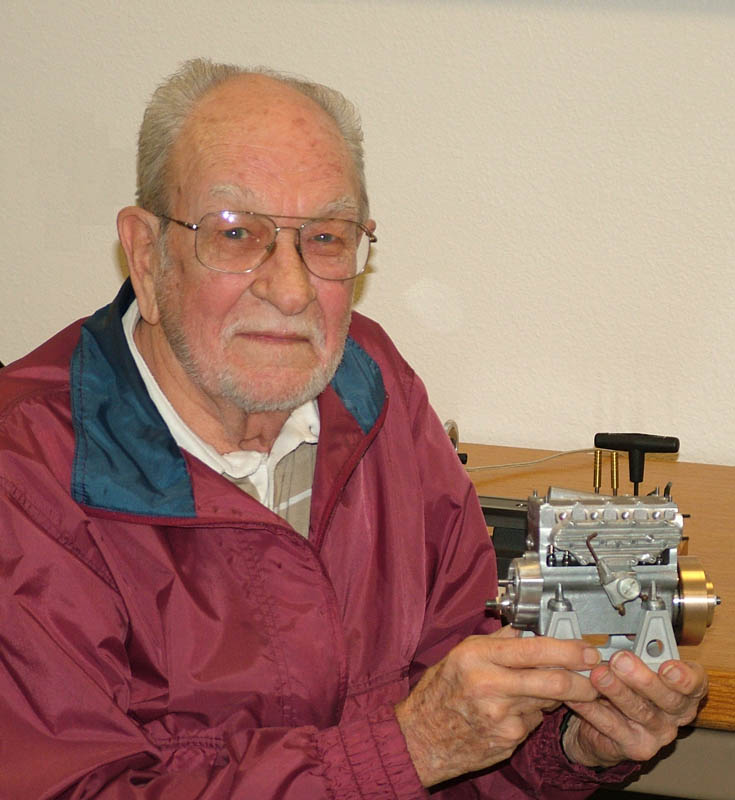
In addition to building his model crane, Larry also machined a few parts for the museum shop’s Seal Engine build. In this photo, he is holding the partially completed 4-cylinder engine.
Sixteen Years to Build One Model—Time Well Spent
Larry Simon was inspired to build just one scratch model in his life, and it turned out to be an exceptional one. He had built a number of scale model airplanes from kits since his youth, but never from scratch. Some twenty years after working for the company that builds Manitowoc cranes, Larry decided that he wanted to build their giant Model 4600 lift crane in miniature. He obtained brochures from the company, which gave him the basic outline dimensions and some photos of various assemblies and machinery.
Larry decided to build the model at 1/32 scale. He drew up some plans and started the project in 1977, often working in spurts with long breaks between when he couldn’t devote the time. However, Larry never gave up, and he kept coming back until achieving his goal.
All told, Larry finished the model in 1993. He finally had a giant Manitowoc crane that he could park in his living room. After a few years collecting dust, he disassembled the model crane and put it in storage.
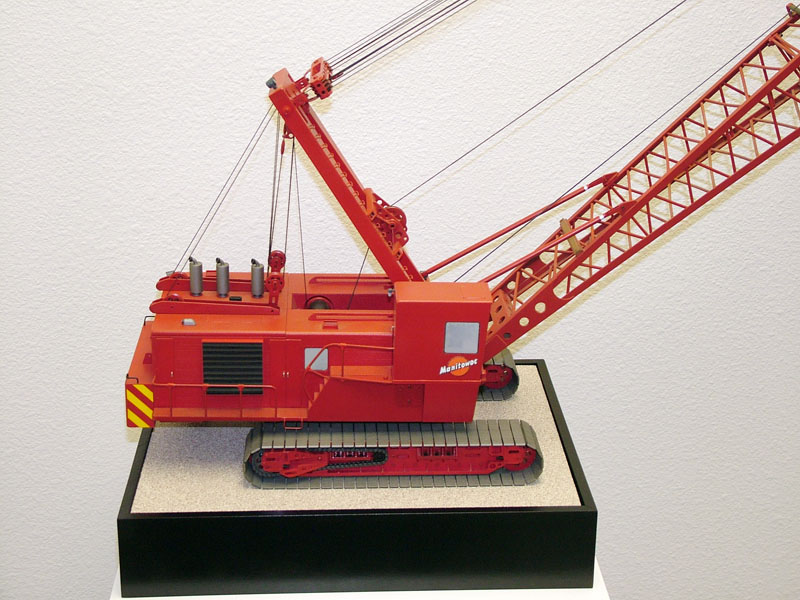
The massive Manitowoc Model 4600 lift crane was always a favorite of Larry’s. Though he had never built a model from scratch before, he learned what he needed along the way. It’s safe to say that he ended up with a fine result.
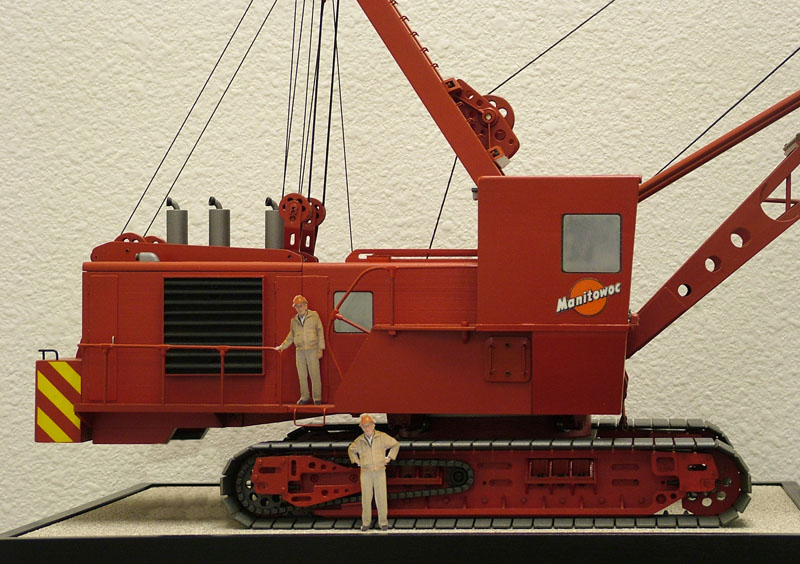
A closer view of the 1/32 scale Manitowoc crane reveals two miniature “Larrys” posing with the machine. Larry took two photos of himself, reduced them to 1/32 scale, and placed the cutouts with the crane to illustrate its size.
In early 2007, Larry took his crane components out of storage and brought them into the Miniature Engineering Craftsmanship Museum where he was volunteering. Once Larry took the crane out of storage, he began working on reassembly, fabricating the display base, and detailing the model. After finishing the project in October, 2007 Larry promptly donated the scale crane to the museum, where it is now on display.
Not only is Larry’s model accurate, but many of the functions of the real crane were duplicated in miniature, too. Even at 1/32 scale, the model boom is still well over 6 feet long.
Additionally, a series of vintage fishing reels hidden in the display base control movement of the boom and main/jib lift hooks. The reels can be accessed through holes on the back side.
Larry’s lack of scratch-building experience when he began, along with his determination to finish, and the excellence of the final model should offer inspiration to his peers. Larry’s example shows that with enough resolve, anyone can gain the skills needed to make an excellent scale model.
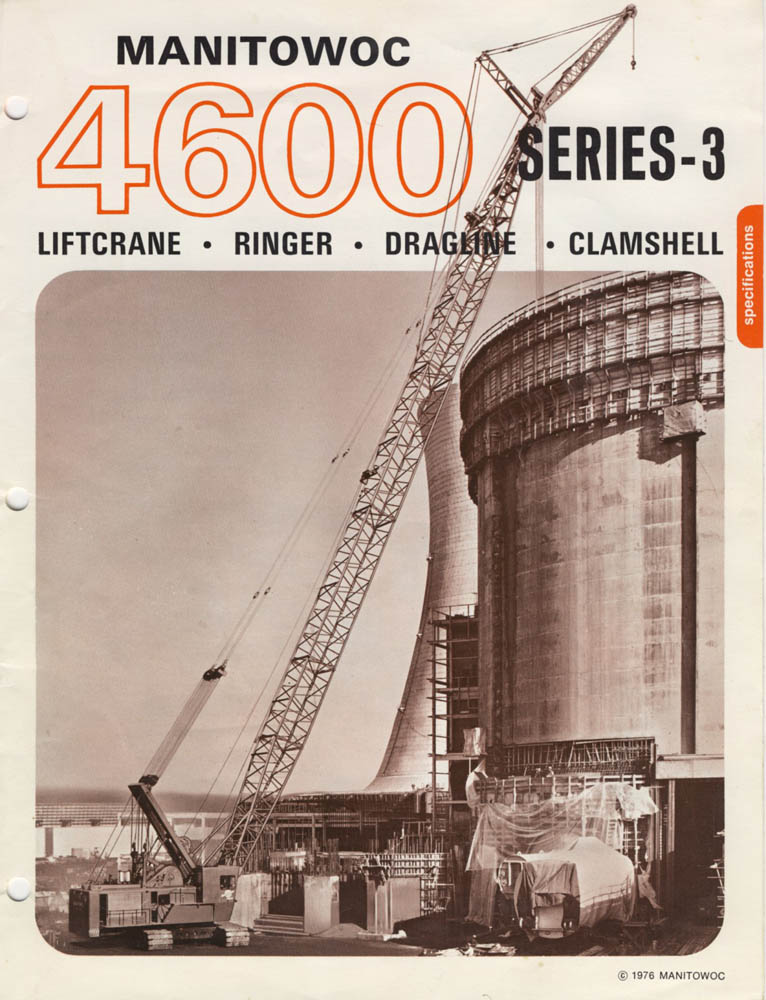
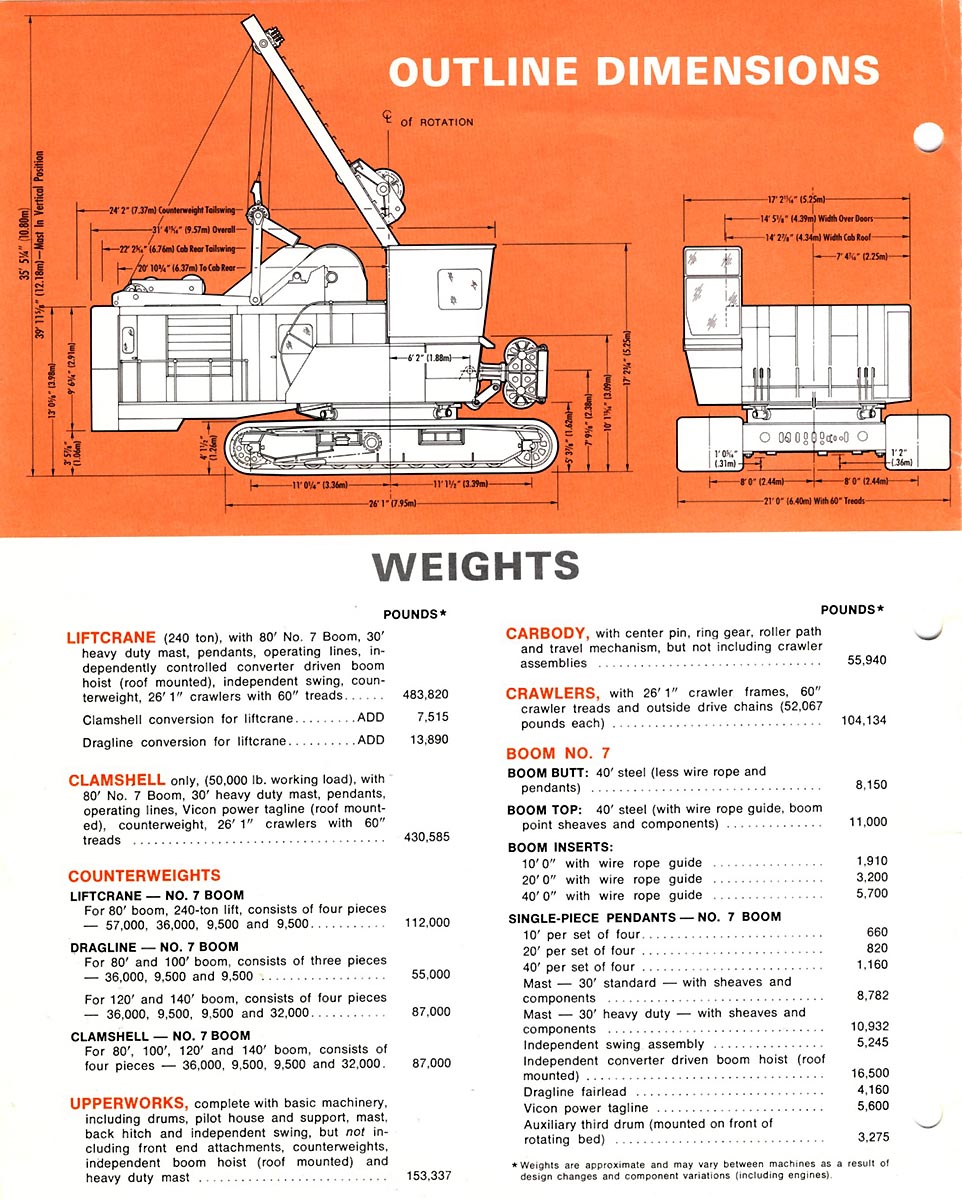
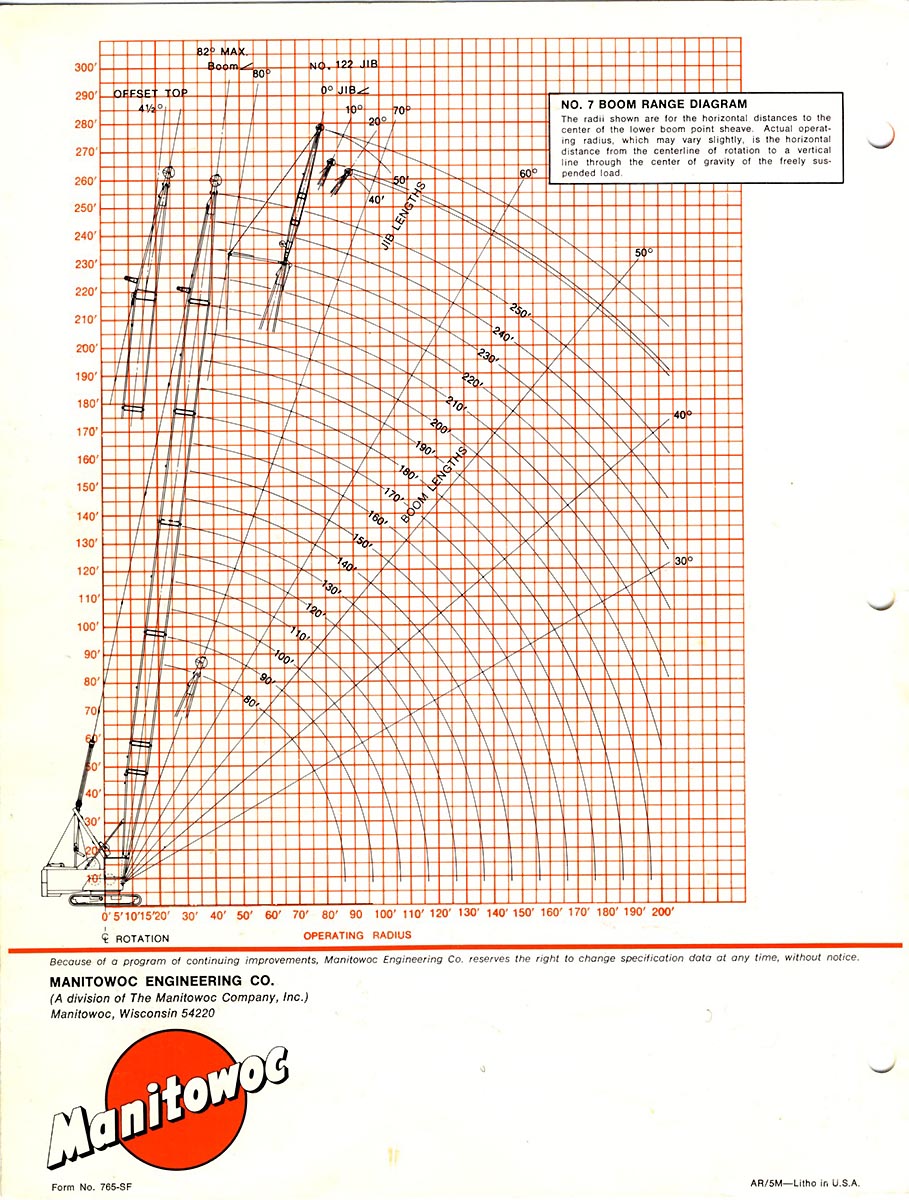
These pages are from the Manitowoc Company’s brochure for the real Model 4600 lift crane. The brochure provided Larry with much of the information needed for his scale model. The actual crane stands over 17’ tall to the top of the cab, and has a tread length of 26’, and tread width of 21’. The crane weighs over 480,000 lbs. Even with the optional 635 hp Diesel engine, the crane’s maximum speed tops out at 1.3 mph. Its strength is in the reach and lifting capacity.
About Larry
Originally, Larry hailed from a small town in northern Wisconsin. At the age of 9, in early 1941, his family moved to Manitowoc, Wisconsin. The industrial plants in Manitowoc were pressed into service to support military needs prior to America’s entry into WWII. Larry was always mechanically inclined, and wanted someday to become a designer. After 4 years of junior and high school drafting classes, he took correspondence courses in machine design from Chicago Technical College.
This led to a job as a design draftsman in the crane division of the Manitowoc Engineering Company from 1952-1954. Now called The Manitowoc Company, Larry’s former employer builds some of the worlds largest construction cranes. It was there that he gained admiration for these giants of the construction world, and the desire to someday model one.
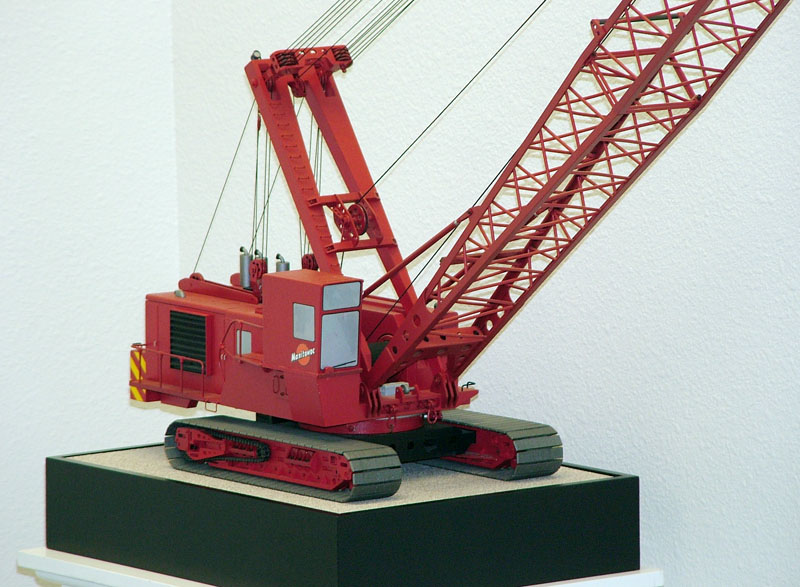
This angle shows more of the tread detail. Larry had discovered a company that made a small link belt that perfectly matches the real one that drives the crane threads. As can often be the case in model making, this one component ultimately determined the scale of the model.
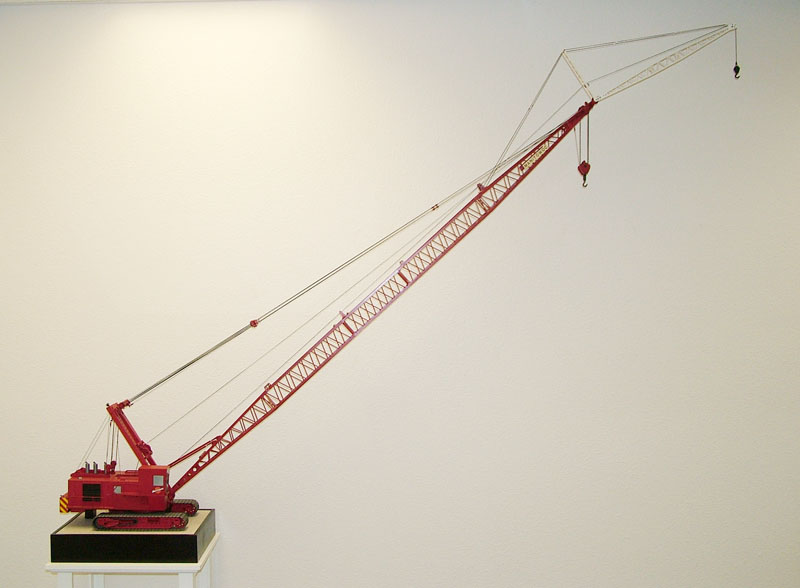
From a distance, the long boom and white jib combine for impressive reach. The boom is approximately 80″ long. Like the real crane, the pilothouse unit carrying the cab and engine must be counterweighted to balance the boom and load.
In 1954, Larry moved to the Los Angeles area. He worked for companies that designed and built motion picture cameras for the movie industry and the military. In 1959, Larry got a job with a company that he would stay with for the next 14 years.
In 1963, Larry’s employer offered relocation to San Marcos, CA, where Larry would work for another 10 years. He then joined TRW, where he stayed through 1990, then returned to his former employer until retirement in 1993.
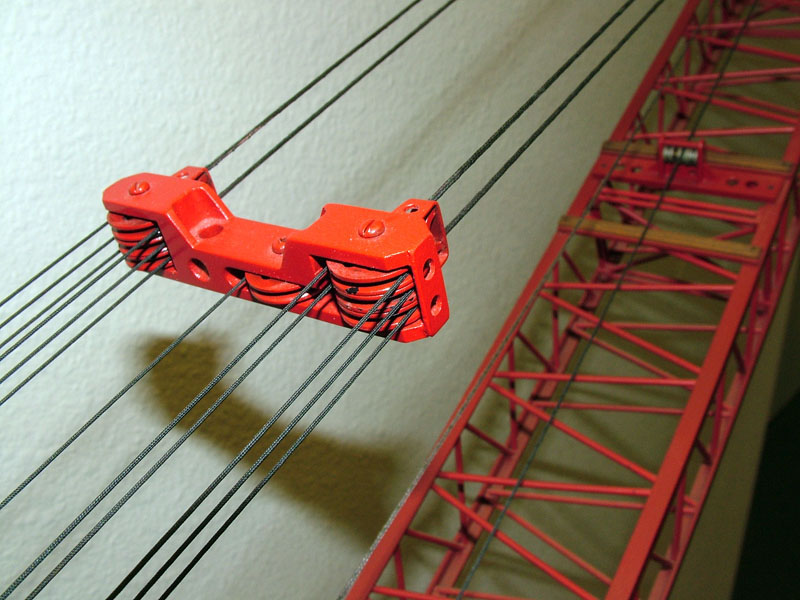
Many pulleys provide the leverage needed to lift massive weights.
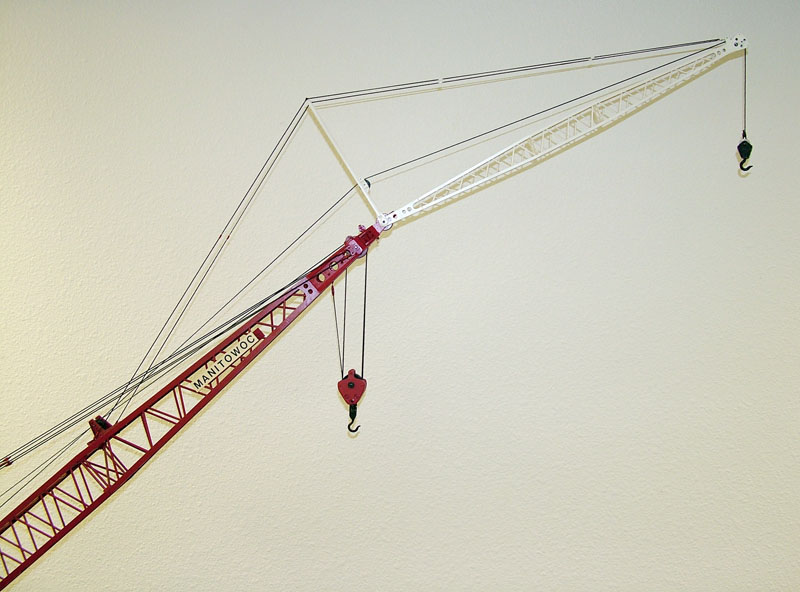
The optional white jib extends the reach of the boom by another 40 or 50 feet depending on the model.
Volunteer Efforts at Palomar Airport Lead to Civic Award
Larry’s love of airplanes often drew him to the nearby county-owned Palomar Airport. He frequently visited the airport to watch the activity at the busy facility. One day, while observing the aircraft arrive and depart, Larry had a chance encounter with the airport manager. Larry’s ability to identify aircraft, both new and old, prompted the manager to ask if he would be interested in volunteering to guide tours at the airport.
Larry jumped at the chance, and was named Airport Tour Director (an admittedly fictitious title, since there were no designated tour guides at any other country airports). He scheduled and conducted tours at Palomar Airport for more than 9 years, averaging over 2,000 visitors a year. In 1995, Larry was honored as Volunteer of the Year for his service, an award chosen from over 1,200 volunteers.
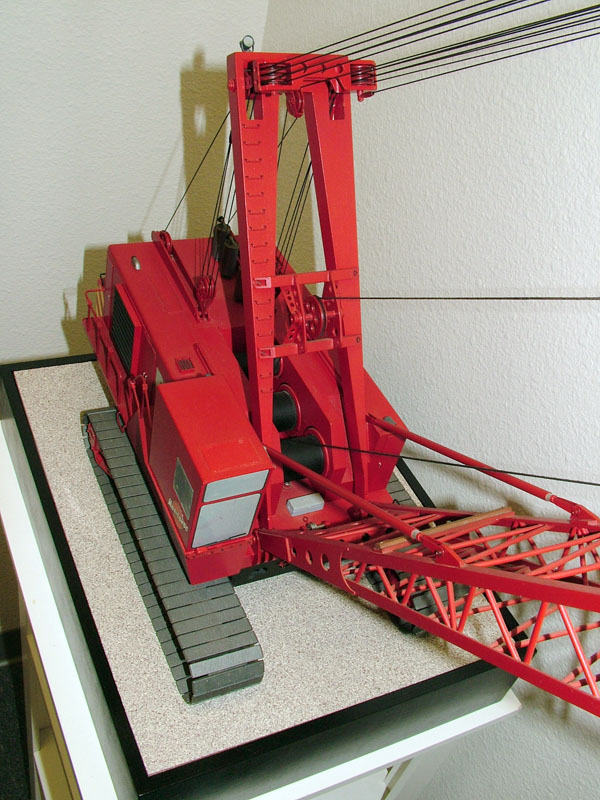
Looking at the front of the mast, notice some of the drums that operate the various lines. Larry hid vintage fishing reels beneath the display base to do the actual lifting of the boom and hooks.
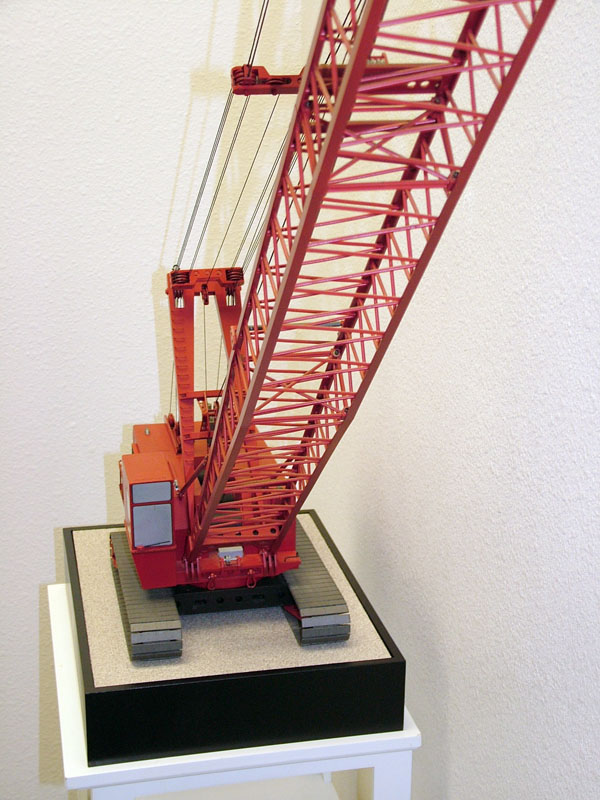
There is plenty of structural detail in the boom, which was constructed mostly of scale plastic shapes from an industrial model company.
Volunteering at the Craftsmanship Museum
In June 2006, Larry was again looking to occupy some of his time when he spotted an ad for the Craftsmanship Museum in the local paper. The museum was looking for help in our newly opened machine shop. The Joe Martin Foundation ultimately hired machinist Tom Boyer for the position, but Larry enjoyed the museum and offered his services as a volunteer when Tom was off. We gladly accepted his offer, and many visitors were treated to expert guided tours by the always patient and friendly Larry.
We regret to announce that Larry passed away on April 20, 2011. He was a great friend to the museum, and a stalwart volunteer for over four years. Larry kindly left his machine tools to the Joe Martin Foundation. They will continue to be useful to our shop craftsmen. The Craftsmanship Museum lounge was named “Larry’s Lounge” in his honor. We are glad that he got to see the new lounge before he passed, as Larry treasured the time he spent at the museum talking to visitors and fellow craftsmen.
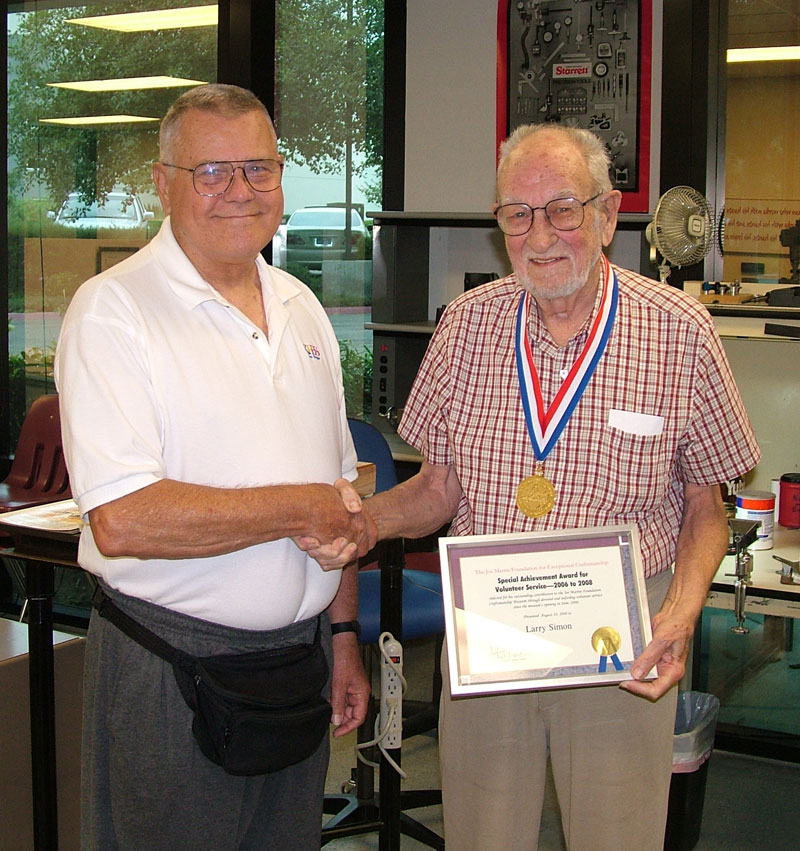
On August 29, 2008 Larry was presented with an award for his volunteer service. He manned the museum and hosted tours every Monday, and any day that our regular shop craftsman couldn’t work. Larry attended the opening day of the Craftsmanship Museum in 2006, and immediately offered his services. He quickly became an indispensable part of the museum staff. This photo shows Larry (right) receiving an engraved gold medallion, a certificate of thanks, and a handshake from founder Joe Martin. A group of friends gathered to thank Larry for his efforts on behalf of the museum.
View more photos of Larry’s impressive 1/32 scale Manitowoc crane.
This section is sponsored by:

Makers of precision miniature machine tools and accessories. Sherline tools are made in the USA.